
Marketplace Growth
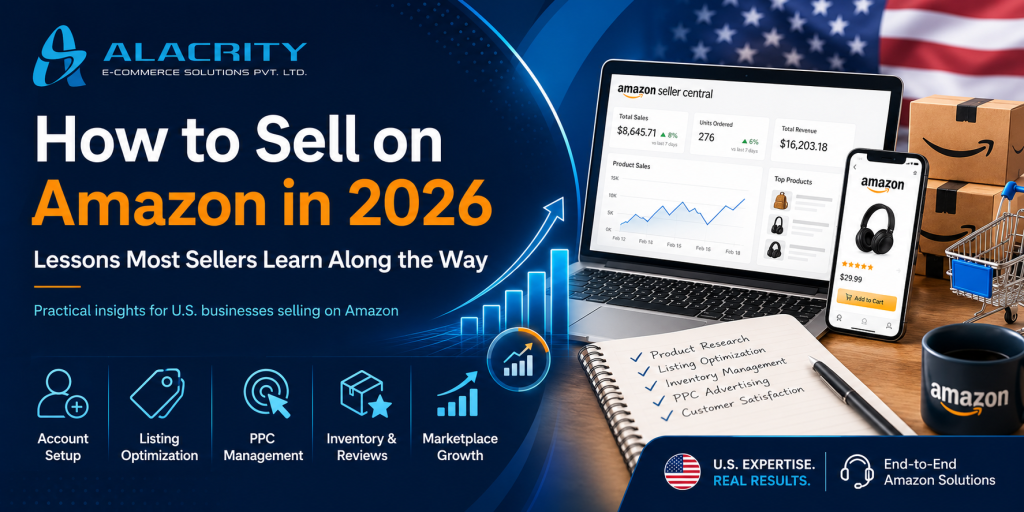
How to Sell on Amazon in 2026: Lessons Most Sellers Learn Along the Way
Creating an Amazon account is the easy part. The real work begins when products, stock, ads, and customer needs must be handled together.
In this guide
Products. Listings. Fulfillment. Margins.



Creating an Amazon account is the easy part. The real work begins when products, stock, ads, and customer needs must be handled together.
Key takeaways
- Confirm product eligibility before buying inventory.
- Calculate margin after fees, fulfillment, ads, and returns.
- Compare FBA with fulfilling orders yourself.
- Make variants, dimensions, and pack sizes clear.
- Start small and review actual costs before expanding.
Getting Started as an Amazon Seller
Begin by deciding whether the Individual or Professional plan fits the amount you expect to sell and the tools you will use.
In the United States, Amazon’s Individual plan charges $0.99 per item sold, plus applicable selling fees. The Professional plan costs $39.99 per month, plus selling fees. It is generally better suited to sellers expecting more than 40 unit sales per month or needing advertising and bulk listing tools.
Paying for the Professional plan does not automatically win the Featured Offer, formerly called the Buy Box. Price, available stock, fulfillment, and delivery results still influence which eligible offer Amazon displays.
Check restrictions, category rules, and required documents before putting money into inventory. A smaller starting range is usually easier to manage while learning the platform.
Practical principle
Run the numbers on one unit before ordering a full batch.
Use Amazon’s Revenue Calculator to compare fulfillment options using the product’s packaged weight and dimensions. Then factor in expected ad spend and returns to see whether the SKU still leaves enough margin.
Building an Amazon Listing That Helps Shoppers Decide
Before a shopper buys, the page needs to settle the basic questions they are likely to have.
Work the main search phrases into the title and copy only where they read naturally, then use the backend fields for other relevant terms.
A bullet works best when it tells the shopper what the feature actually does for them.
One image is enough to get a listing live, though Amazon recommends adding six or more. The main image should show the product clearly, while the remaining slots can cover measurements, close-ups, alternate views, and package contents.
A+ Content gives eligible brands room to compare products, use video, and add details that do not fit neatly into the standard listing. These additions help explain the offer, but the basic listing still matters.
What Helps an Amazon Product Gain Ground
A live listing is only the starting point. Price, inventory, fulfillment, ads, reviews, returns, and account health can all affect how the product performs.
Read clicks and conversion together with ad costs, stock levels, return reasons, and the searches that bring shoppers to the page.
Work on the clearest problem first instead of raising the budget or changing the whole listing at once.
Running Amazon PPC With a Clearer Purpose
With Sponsored Products, a seller can let Amazon choose targets, select them manually, or run both campaign types.
An automatic campaign can surface useful shopper searches and related product pages. Terms that produce sales can then be tested in manual campaigns, while weak or irrelevant targets can be blocked.
Review a campaign after it has gathered enough activity to show a pattern. Traffic, spend, bids, competition, seasonality, price, and demand all affect that timing.
Review reports regularly. Traffic from ads helps only when the listing gives shoppers enough reason to stay and buy.
When campaign work starts taking too much time, some sellers turn to Amazon PPC management services. The work may involve checking search terms, changing bids, cleaning up campaign structure, cutting spend on weak traffic, and seeing whether the ads are actually making money.
AMAZON LAUNCH READINESS
Are Your First Amazon Products Ready to Launch?
Alacrity can review your launch assortment, product listings, and fulfillment plan to flag gaps in product data, pricing, or inventory before you commit to a larger order.
Asking for Amazon Reviews the Right Way
The Request a Review button is normally available from the fifth through the thirtieth day after the estimated delivery date.
Do not offer a refund, discount, gift, or other reward for a review. Customers must remain free to share any honest opinion.
Qualifying products may use Amazon Vine to receive early reviews from invited Vine Voices. Participation requires a Professional account, eligible FBA inventory, and compliance with the rest of Amazon’s Vine rules. Vine reviews are independent and may be positive, neutral, or negative.
A safer review strategy is simple: describe the item honestly, fulfill the order properly, and use the tools Amazon permits.
Adding Walmart Marketplace to the Mix
For some brands already established on Amazon, Walmart Marketplace can become a useful second place to sell.
Walmart does not follow Amazon’s setup. Sellers must complete Walmart’s approval process, then review the product page again for its catalog fields, images, pricing, fulfillment choices, and delivery details.
Walmart has advertising tools of its own, while certain eligible Marketplace items may also appear in paid Google Shopping placements.
Managing both channels means tracking stock, orders, returns, and customer messages according to the rules of each platform.
Where Alacrity Can Help
Alacrity E-Commerce Solutions entered the e-commerce field in 2009. The work varies from one client to the next. It may begin with a listing that needs attention, an advertising account that needs closer management, or customer and account cases that are taking up too much time.
Through its Amazon Seller Central management services, Alacrity can assist with listing updates, buyer communication, account issues, reporting, and other day-to-day work inside Seller Central.
Businesses looking for Amazon seller account management services USA support may also need help connecting advertising, customer service, account health, and marketplace operations instead of managing each area separately.
Brands often search for an Amazon marketplace management agency USA businesses can work with when their internal team is stretched. Alacrity also supports businesses in the UK, Singapore, Australia, and India, including those preparing to enter new marketplaces.
A Practical Takeaway
Amazon is easier to manage when the account, product pages, inventory, delivery, and ads are not treated as separate jobs.
Most improvements come from watching what the numbers are showing and dealing with small problems early.
AMAZON SELLER CENTRAL. PPC.
Know Which Products Deserve More Stock and Ad Spend
Alacrity can help manage your listings, inventory, and Amazon Ads together. Use sales, return reasons, and margin by SKU to decide what to restock, what to fix, and where to increase spend.
Conclusion
Opening an Amazon seller account is only the first step. A sound launch starts with eligible products, accurate listings, reliable fulfillment, and a margin that can withstand the costs of selling.
Launch a small assortment first. Compare your estimates with actual fees, ad costs, and returns. Expand when the numbers hold up and your team can keep orders moving reliably.
ABOUT THE AUTHOR
Alacrity Team
The Alacrity Team shares insights, industry updates, and practical strategies across digital marketing, SEO, e-commerce, paid advertising, and online business growth. Our content is informed by industry research, hands-on experience, and the collective expertise of our digital growth specialists.
Guides
Let's Grow Your Business
- Boost Google & AI Search Visibility
- Drive growth with SEO, AEO, GEO & paid ads
- Scale Sales Across Online Marketplaces
- Build High-Converting Websites & Stores
- Strengthen Brands Through Creative Content
Worth Knowing
Questions worth asking.
Not as it is. Keep the product facts that remain correct, then rework the title, fields, pictures, price, and shipping information for Walmart.
That depends on the account. One seller may need help with listings and ads, while another may need support with customer messages, account health, stock coordination, reports, or entry into another marketplace.
AMAZON LAUNCH STRATEGY
Know What Each Sale Leaves Before You Buy More Stock
Keep Reading
More ideas that move business forward.
Related thinking across paid media, e-commerce and digital performance.

Can LinkedIn Posts Rank or Get Cited in AI Search?
AI Search Can LinkedIn Posts Rank or Get Cited in AI Search? A Practical B2B GuideYes, public LinkedIn posts can appear in...
Read Article ↗
How B2B Content Can Improve Brand Visibility in ChatGPT and Gemini
AI Search How B2B Content Can Improve Brand Visibility in ChatGPT and Gemini An article that is useful on LinkedIn can be...
Read Article ↗
How Google and AI Engines Understand Your Brand
AI Search How Google and AI Engines Understand Your Brand Since the website displays your business in only one way, the old...
Read Article ↗